The Ultimate 8-Day Iceland Winter Adventure: Chasing the Northern Lights and Exploring Glaciers


Destination (from India)
Dates of Travel (optional)
List of Content
Introduction
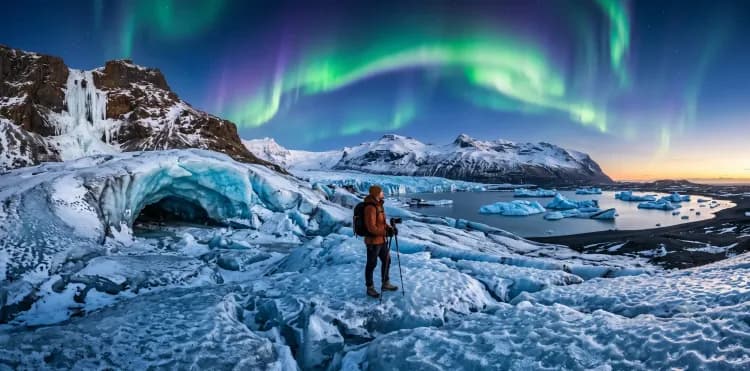
If you've ever dreamed of seeing the Northern Lights, walking across glaciers, or standing beside waterfalls surrounded by snow, winter is one of the best times to visit Iceland.
The country looks completely different during the colder months. Days are shorter, landscapes are covered in snow, and there's always the possibility of spotting the aurora dancing across the night sky. While winter travel requires a little extra planning, the rewards are well worth it.
Here's an 8-day itinerary that combines Iceland's famous natural attractions with unforgettable winter experiences.
Why Winter Is a Great Time to Visit Iceland
Winter offers a different side of Iceland. Popular attractions are generally less crowded than in summer, frozen waterfalls create spectacular scenery, and the long nights provide ideal conditions for viewing the Northern Lights.
Experts also expect aurora activity to remain favourable through 2026 due to the current phase of the solar cycle, giving travellers a better chance of witnessing this incredible natural phenomenon. Of course, the lights are never guaranteed, but clear skies and a little patience can go a long way.
Days 1 and 2: South Coast, Waterfalls and Jökulsárlón Glacier Lagoon
After arriving in Reykjavík, begin your journey along Iceland's stunning South Coast.
Along the way, stop at two of the country's most famous waterfalls: Seljalandsfoss, where you can walk behind the waterfall in suitable conditions, and the powerful Skógafoss, known for its impressive drop and frequent rainbows on clear days.
Continue east towards one of Iceland's most spectacular natural attractions, Jökulsárlón Glacier Lagoon.
Here, enormous icebergs slowly break away from the Breiðamerkurjökull Glacier and drift peacefully across the lagoon before making their way toward the sea. If you're lucky, you might even spot seals swimming between the floating ice.
Just across the road is Diamond Beach, where chunks of glacier ice wash ashore on black volcanic sand. As sunlight catches the ice, it sparkles like scattered diamonds, giving the beach its famous name. Every visit looks different because the shapes and sizes of the ice constantly change.
If time allows, join a guided glacier hike or an ice cave tour. These experiences offer a close-up look at Iceland's glaciers while ensuring you explore them safely with experienced guides.
Days 3 and 4: Thingvellir National Park and Lava Caves
Next, head to Thingvellir National Park, one of Iceland's most significant historical and geological sites.
It's one of the few places in the world where you can stand between the North American and Eurasian tectonic plates. The dramatic landscape of lava fields, cliffs, and clear streams makes it one of the country's most fascinating national parks.
Continue towards Húsafell for a completely different adventure. Depending on weather conditions, you can enjoy snowshoeing before exploring the impressive Víðgelmir Lava Cave, where volcanic tunnels, colourful rock formations, and winter ice formations create an unforgettable underground landscape.
Days 5 to 8: Snæfellsnes Peninsula and Reykjavík
Spend the next few days exploring the Snæfellsnes Peninsula, often called "Iceland in Miniature" because it showcases many of the country's most famous landscapes in one region.
You'll find dramatic sea cliffs, black sand beaches, lava fields, fishing villages, waterfalls, and the iconic Kirkjufell mountain, one of Iceland's most photographed landmarks.
Return to Reykjavík for the final part of your trip. Wander through the city's colourful streets, sample Icelandic cuisine, browse local boutiques, visit museums, and unwind in one of Iceland's famous geothermal pools before heading home.
Tips for Seeing the Northern Lights
The Northern Lights season typically runs from late August until mid-April, although winter generally offers the longest hours of darkness.
To improve your chances:
• Choose locations away from city lights whenever possible.
• Check local weather forecasts for clear skies.
• Keep an eye on aurora forecasts, but remember that even a strong forecast won't help if clouds block the view.
• Be patient. Sometimes the lights appear for only a few minutes before fading, while other nights they can dance across the sky for hours.
Jökulsárlón Glacier Lagoon is considered one of Iceland's most beautiful places to photograph the Northern Lights, thanks to the reflections created by the floating icebergs.
A Favourite Among Filmmakers
If parts of Iceland seem familiar, there's a good reason.
Jökulsárlón Glacier Lagoon has appeared in films such as Die Another Day, A View to a Kill, and Tomb Raider. Nearby glaciers have also featured in productions including Interstellar and Batman Begins, thanks to their dramatic, otherworldly landscapes.
Stay Safe Around Glaciers and Ice
Iceland's natural beauty is breathtaking, but it's important to respect the environment and follow local safety advice.
Never climb onto floating icebergs at Jökulsárlón Glacier Lagoon. Although they may appear stable, icebergs can suddenly roll or break apart without warning.
Similarly, avoid entering the water or standing too close to the shoreline at Diamond Beach. Strong currents and freezing water make the area dangerous, even for experienced swimmers.
When exploring glaciers or ice caves, always book guided tours with licensed operators rather than attempting to explore independently.
A Few Helpful Planning Tips
Winter weather in Iceland can change quickly, so it's worth checking road conditions and weather forecasts every day before setting out.
Pack waterproof clothing, warm layers, insulated boots, gloves, and a hat, as temperatures can drop quickly, especially near glaciers and waterfalls.
Accommodation near Jökulsárlón is limited, particularly during the Northern Lights season, so booking several months in advance is recommended. If hotels near the lagoon are unavailable, the nearby town of Höfn is a convenient alternative.
Final Thoughts
An Icelandic winter is unlike any other travel experience. From walking beside floating icebergs and exploring ancient lava caves to relaxing in geothermal pools after a day of adventure, every day brings something completely different.
With a flexible itinerary, warm clothing, and a little luck from the weather, you'll have an excellent chance of experiencing some of Iceland's most unforgettable winter landscapes and, if conditions are right, witnessing the magic of the Northern Lights.
Other topics
Explore and Discover
Discovering Germany’s Hidden Gems: Beyond the Famous Landmarks
Thursday, Jul 9, 2026
Step beyond Germany's iconic castles and bustling cities to uncover its hidden treasures. From fairytale villages and scenic river valleys to peaceful national parks and lesser-known historic towns.
Travel Agent Insight – UK Visa Process
Thursday, Apr 30, 2026
Navigating the UK visa process can feel overwhelming, especially with evolving regulations and documentation requirements. For travel agents, having a clear understanding of visa categories, eligibility criteria, and application procedures is essential to providing reliable guidance to clients.