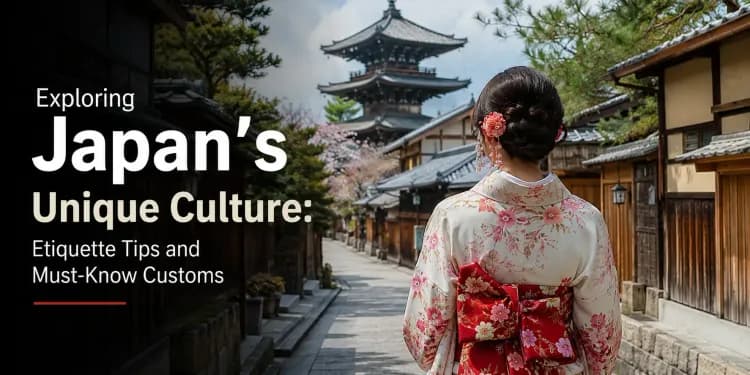
Exploring Japan's Unique Culture: Etiquette Tips and Must-Know Customs


Destination (from India)
Dates of Travel (optional)
List of Content
Introduction
One of the best parts of visiting Japan isn't just seeing its famous temples, cherry blossoms, or bustling cities. It's experiencing a culture that values respect, thoughtfulness, and consideration in everyday life.
For first-time visitors, some customs may seem unfamiliar at first. You might wonder whether you should tip at a restaurant, how to behave on public transport, or what to do when entering a traditional home or temple. The good news is that you don't need to know every cultural rule before you arrive. Simply making an effort to understand local etiquette is something many Japanese people genuinely appreciate.
If you're planning a trip to Japan, here are some customs and etiquette tips that will help you feel more confident during your visit.
Bowing Is a Sign of Respect
Bowing is one of Japan's most well-known customs. While visitors aren't expected to bow perfectly, understanding its meaning can go a long way.
People bow to greet one another, express gratitude, apologize, or show respect. As a traveler, a slight nod of the head is usually more than enough in most situations. Don't worry if you're unsure of the correct angle or duration. A polite smile and respectful attitude matter far more.
Remove Your Shoes When Required
One of the first things you'll notice in Japan is how often people remove their shoes before entering certain spaces.
You'll usually be expected to take off your shoes when entering someone's home, traditional ryokan inns, many temples, some restaurants, and occasionally even fitting rooms or historic buildings. If you see shoes lined up neatly near the entrance or slippers provided, it's a good sign that shoes should come off.
Many places also provide separate slippers for bathrooms, so remember to switch back before leaving.
Keep Your Voice Down on Public Transport
Japan's trains are known for being clean, punctual, and surprisingly quiet.
It's common for passengers to keep conversations low and avoid phone calls while riding. If you're traveling with friends or family, speaking softly is considered courteous, especially during busy commuting hours.
Following the local atmosphere is usually the easiest guide.
Tipping Isn't Part of the Culture
This often surprises international visitors.
Unlike many other countries, tipping is generally not expected in Japan. Restaurants, hotels, taxis, and many other service providers already include excellent service as part of the experience.
In some situations, leaving extra money may even create confusion, as staff might think you've accidentally forgotten your change. Simply thanking someone politely is more than enough.
Be Mindful While Eating
Dining in Japan comes with a few customs that are easy to follow once you know them.
For example, avoid sticking chopsticks upright into a bowl of rice, as this is associated with funeral rituals. Instead, place them neatly on the chopstick rest when you're not eating.
It's also considered polite to wait until everyone has been served before beginning your meal. Before eating, many people say "Itadakimasu," a traditional expression of gratitude for the meal.
Don't worry about mastering every dining custom. Showing consideration and observing those around you will usually keep you on the right track.
Queue Patiently
Whether you're waiting for a train, boarding an elevator, or buying food from a popular shop, orderly queues are a normal part of daily life in Japan.
People generally wait their turn without pushing or rushing ahead. You'll often notice markings on station platforms showing exactly where passengers should line up before boarding.
Joining the queue and waiting patiently is one of the simplest ways to blend in with local customs.
Respect Sacred Places
Japan is home to thousands of beautiful temples and shrines, many of which remain active places of worship.
When visiting these sites, dress modestly, keep noise to a minimum, and follow any posted signs regarding photography or restricted areas. At some shrines, you'll also see visitors perform a simple purification ritual by washing their hands before entering.
Even if you're unfamiliar with the traditions, observing quietly and following the lead of others is perfectly acceptable.
Be Careful with Public Trash Bins
One thing many visitors notice is that public rubbish bins can be surprisingly difficult to find.
Many people simply carry their trash with them until they find an appropriate bin later. If you purchase food from a convenience store, festival stall, or takeaway shop, check whether disposal bins are available nearby.
Keeping public spaces clean is something that is taken seriously throughout Japan.
Carry Some Cash
Although digital payments are becoming more common, cash is still widely used in many parts of Japan, particularly in smaller towns, local restaurants, temples, markets, and family-run businesses.
Having some Japanese yen on hand can save you from awkward situations where cards or mobile payments aren't accepted.
Learn a Few Simple Japanese Phrases
You don't need to speak fluent Japanese to enjoy your trip, but learning a few everyday phrases can make interactions smoother and often brings a smile.
Some useful expressions include:
• Konnichiwa – Hello
• Arigatou gozaimasu – Thank you very much
• Sumimasen – Excuse me / Sorry
• Onegaishimasu – Please
• Hai – Yes
Even a small effort to speak the local language is usually appreciated.
Final Thoughts
Japan offers an unforgettable blend of ancient traditions and modern innovation, and experiencing its culture is often just as rewarding as visiting its famous attractions.
You don't need to memorize every etiquette rule before your trip. Being respectful, patient, and open to local customs will help you navigate everyday situations with confidence. More often than not, it's the small gestures, like speaking quietly, waiting your turn, or removing your shoes, that leave the biggest impression.
A little cultural awareness can make your journey smoother and help you connect more meaningfully with the places and people you encounter along the way.
Other topics
Explore and Discover

Dubai Uncovered: Iconic Experiences and Safety Tips for Travellers
Thursday, Jul 9, 2026
Discover the best of Dubai with this practical travel guide featuring iconic attractions, unforgettable experiences, and essential safety tips. From towering skyscrapers and desert adventures to local customs and smart travel advice, learn how to explore Dubai confidently while making the most of your trip.

Exploring Japan's Unique Culture - Etiquette Tips and Must-Know Customs
Thursday, May 7, 2026
Japan blends deep-rooted tradition with modern life in ways that can feel both fascinating and unfamiliar to visitors. Understanding a few key customs can make interactions smoother and show respect for local culture.

Visa on Arrival for Indians
Tuesday, May 5, 2026
Visa on Arrival (VoA) is offered by several countries that allows Indian citizens to obtain a visa upon entering the destination country, rather than applying in advance at an embassy or consulate.