The Smart Luggage Revolution: Are GPS-Enabled Bags Worth the Investment?


Destination (from India)
Dates of Travel (optional)
List of Content
- •Introduction: From Trunks to Trackers
- •What is Smart Luggage? A Traveller’s Tech-Savvy Companion
- •GPS vs Bluetooth Tracking: What Works Best for Smart Luggage?
- •How These Technologies Work Across Countries
- •Benefits of GPS-Enabled Luggage
- •Who Should Invest in Smart Luggage?
- •Future of Travel Tech and Smart Luggage
- •Conclusion
Introduction: From Trunks to Trackers
Luggage has always evolved in step with changes in how people travel. In earlier decades, travellers packed their belongings into heavy trunks, built more for endurance than ease. As air travel became more accessible in the 20th century, the demands shifted—suitcases grew lighter, wheels became standard, and innovations such as spinner systems transformed convenience into a travel essential.
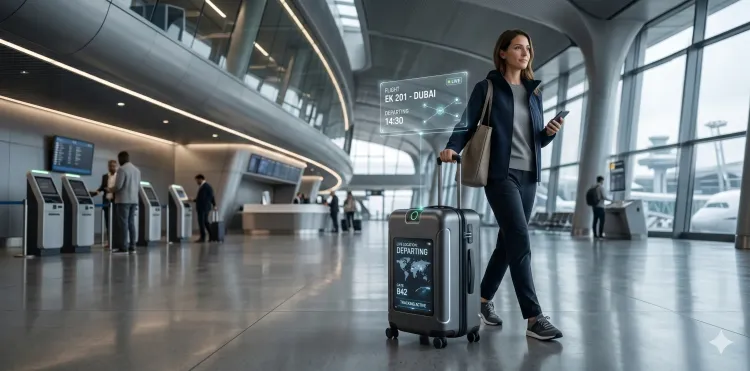
Now, in the 21st century, a new transformation is underway: the rise of smart luggage. These advanced travel bags integrate technology to enhance security and functionality. Among the most notable features is GPS-enabled tracking, which allows users to monitor the real-time location of their luggage via smartphones or web applications.
By offering live updates, movement alerts, and even remote locking, GPS-enabled bags aim to solve a longstanding problem—lost luggage. While these innovations promise greater peace of mind, they also raise questions about cost, battery restrictions, and travel regulations. Modern travel isn’t just about reaching your destination—it’s about staying connected, secure, and stress-free. Here’s what makes smart luggage such a game-changer:
What is Smart Luggage? A Traveller’s Tech-Savvy Companion
In today’s fast-paced world, travel technology has transformed the way people move across the globe. Among these innovations, smart luggage stands out as a breakthrough that redefines convenience and security for the modern traveller. Imagine a busy professional named Emma, who once lost her suitcase on a business trip and endured hours of stress and uncertainty. Since switching to a GPS-enabled bag, Emma now tracks her luggage in real time through her smartphone, never worrying about misplacement again. This is the power of smart luggage and luggage tracking.
Smart luggage refers to travel bags—whether a carry-on, checked suitcase, or backpack—that integrate electronic features beyond traditional designs. These bags merge practicality with technology to offer solutions tailored to the demands of modern travel.
Here are some key features that travellers like Emma appreciate:
1. GPS Tracking
This feature allows users to locate their luggage anywhere worldwide where GPS coverage exists. It sends live location updates to smartphone apps, making it easier to recover lost bags or simply keep an eye on their journey.
2. USB Charging Ports
Built-in USB ports and power banks provide a convenient way to recharge phones, tablets, and other devices during transit. This feature eliminates frantic searches for charging points at airports or train stations.
3. Weight Sensors
Some smart bags include integrated scales that weigh the luggage automatically, helping travellers avoid overweight baggage fees by ensuring compliance with airline limits.
In essence, smart luggage represents a fusion of traditional craftsmanship and cutting-edge travel technology, delivering enhanced security, convenience, and connectivity. For travellers like Emma, investing in these advanced bags transforms the travel experience from stressful to seamless.
GPS vs Bluetooth Tracking: What Works Best for Smart Luggage?
Imagine Raj, an avid traveller who’s always on the go—from bustling city airports in New York to remote European towns. After a mishap where his luggage went missing, he decided to invest in a GPS-enabled bag to stay in control of his belongings. His friend Asha, on the other hand, prefers a simpler solution and carries a Bluetooth tracker. Their experiences highlight the key differences between these two popular luggage tracking technologies.
1. GPS Tracking: Global Location at Your Fingertips
GPS-enabled bags utilise satellite-based Global Positioning System technology to provide accurate, real-time location data anywhere in the world. This means Raj can monitor his luggage’s exact position via a smartphone app or web interface, whether his bag is in Tokyo, London, or New Delhi.
● How it Works: GPS devices inside smart luggage communicate with satellites and then send location data over cellular networks (4G/5G). Because this technology doesn’t rely on proximity to Raj’s phone, he can track his bag globally, provided there’s cellular coverage in the area.
● Ideal for International Travel: For frequent flyers and globetrotters like Raj, GPS tracking offers peace of mind across borders and time zones. It’s especially useful for checked smart luggage, where the bag might be out of sight for hours or days.
● Challenges: GPS trackers consume more battery power due to constant satellite communication and cellular data usage. Hence, battery life and compliance with airline regulations for removable lithium-ion batteries are important considerations.
2. Bluetooth Tracking: Quick and Convenient Nearby Tracking
Asha’s Bluetooth tracker works quite differently. Devices like Apple AirTag or Tile use short-range Bluetooth signals to connect to her phone, with an effective range of about 100 meters in ideal conditions but usually less in busy airports.
● How it Works: The tracker communicates directly with Asha’s smartphone when within range. If her bag is nearby but out of sight—like on a carousel or hidden under a seat—she can quickly locate it by triggering a sound or checking the app.
● Crowd-Sourced Network: If her bag is out of Bluetooth range, many trackers use a crowd-sourced network where other users’ phones can anonymously detect and relay the tracker’s location. This indirect method improves chances of finding lost luggage in busy areas but doesn’t provide continuous global tracking.
● Advantages: Bluetooth trackers are usually smaller, have longer battery life, and are cheaper. They are perfect for frequent short trips, carry-on bags, or backpacks when the luggage is always nearby.
● Limitations: Bluetooth tracking is not suited for international or long-distance travel where the bag might be hundreds of miles away without any nearby smartphone to pick up its signal.
How These Technologies Work Across Countries
Both GPS and Bluetooth trackers aim to enhance travel security, but their technical functioning across countries differs significantly.
● GPS-enabled luggage trackers rely on a combination of GPS satellites and cellular networks to relay location data globally. Modern smart luggage trackers support roaming across multiple countries and networks, enabling travellers like Raj to monitor their bags regardless of where they land.
● Bluetooth trackers rely primarily on your phone’s proximity or the presence of other users’ devices in the area. While this crowd-sourced system can sometimes locate luggage even when the owner is far, it depends heavily on a dense network of users and is limited to specific regions or airports.
Battery Placement and Connectivity: What Travellers Should Know
Smart luggage trackers use lithium-ion batteries, either built-in or removable, to power their location and communication systems. Airlines have strict rules about batteries, especially for checked luggage:
● Batteries must usually be removable, with capacity limits often capped at around 100 watt-hours for checked bags to comply with safety regulations.
● GPS trackers generally consume more battery power, so travellers should ensure they recharge their devices before trips and remove batteries if required for checked luggage.
● Bluetooth trackers use minimal power, allowing batteries to last months or years before needing replacement, which is convenient for casual travellers like Asha.
Tracking Made Easy with Mobile Apps
Both GPS and Bluetooth trackers come with dedicated mobile apps that offer travellers real-time updates, route histories, and alerts such as geofencing notifications or tampering alarms. Raj and Asha can even share their luggage’s location with family or security authorities, giving added peace of mind during busy travels.
Benefits of GPS-Enabled Luggage
When Sameer booked his international trip to Europe, he decided to invest in a GPS-enabled bag after hearing horror stories of friends losing their luggage mid-journey. His experience revealed several key advantages that every traveler should know about when considering smart luggage and travel technology for stress-free trips.
1. Peace of Mind and Real-Time Location Tracking
For Sameer, the most valuable benefit was the ability to track his luggage in real time. Using the tracker’s dedicated mobile app, he could check the exact location of his bag from his smartphone at any point—whether it was still at the airport baggage carousel, in transit on a plane, or waiting at his hotel. This feature gave him unparalleled peace of mind, reducing the usual travel anxiety of wondering whether his belongings had arrived safely.
2. Reduction in Lost Luggage Incidents
Thanks to the constant location updates, Sameer was able to avoid losing his bag altogether. In one instance, when his luggage was mistakenly routed to a different terminal, the GPS tracker alerted him immediately, allowing him to alert airline staff and intercept the bag before it was sent to the wrong destination. This real-time insight helps travellers reduce the chances of lost luggage, which remains a major inconvenience worldwide.
3. Easy Airport Navigation with Proximity Alerts
Another useful feature Sameer appreciated was proximity alerts. Some GPS-enabled bags can notify you when you move too far from your luggage or when the bag comes within a certain range of your phone. This is especially handy in crowded airports where distractions are plentiful and leaving luggage behind is all too common. The alerts helped Sameer navigate bustling terminals confidently, ensuring he stayed close to his belongings without constantly looking over his shoulder.
4. Extra Features: Tamper Alerts and Location Sharing
● Tamper Alerts: Sameer’s smart luggage also sent him immediate notifications if anyone tried to open or tamper with his bag. This extra layer of security made him feel protected against theft or unwanted interference during long layovers or hotel stays.
● Location Sharing: Traveling with family, Sameer could share his luggage’s location through the app, keeping everyone informed and connected. This feature is particularly useful when traveling in groups or when multiple people are responsible for baggage, enhancing both security and communication
Who Should Invest in Smart Luggage?
When Anaya started traveling frequently for work, she quickly realised that investing in smart luggage was a game-changer. Here’s who truly benefits from upgrading to GPS-enabled bags and advanced travel technology:
1. Frequent Flyers, Business Travelers, and Digital Nomads
● Frequent Flyers like Anaya face a higher risk of mishandled or lost bags due to constant airport transfers. GPS-enabled luggage offers real-time luggage tracking and security features, turning travel uncertainty into peace of mind.
● Business Travelers demand efficiency and reliability. With quick-access compartments, fingerprint locks, and built-in USB charging, smart luggage helps keep them organised and productive while traveling.
● Digital Nomads need tech-savvy gear that supports mobility and security across borders. GPS tracking combined with durable, versatile luggage lets them focus on work and exploration without worrying about lost bags.
2. Occasional Travelers: Pros and Cons
● Pros: Even if you travel just once or twice a year, smart luggage offers extra protection for valuables and helps when navigating unfamiliar airports or cities.
● Cons: The added expense and features may feel unnecessary for light travellers or weekend vacationers who prefer simplicity.
3. Tech-Savvy vs. Minimalist Travellers
● Tech-Savvy Travelers enjoy the connectivity and control that comes with app integration, real-time GPS tracking, and biometric security systems.
● Minimalist Travelers often opt for lightweight, traditional luggage without extra gadgets, prioritising portability over features.
Future of Travel Tech and Smart Luggage
Smart luggage isn’t just a trend — it’s evolving alongside wider travel technology to redefine how we journey.
1. AI, Biometrics, and Smart Ecosystems
● AI Integration: Imagine a suitcase that provides personalised travel updates, itinerary reminders, or language translation assistance.
● Biometric Security: Fingerprint and facial recognition locks will become commonplace, enhancing both convenience and safety.
● Smart Travel Ecosystems: Future airports and hotels may directly interact with your GPS-enabled bag for streamlined check-ins and seamless baggage handling.
2. Airport Infrastructure Evolution
● IoT-Enabled Airports: Expect connected infrastructure where your luggage communicates with the airport’s network for real-time updates and faster processing.
● Seamless Travel Experience: Reduced wait times and automated security checks could become standard, powered by smart luggage technology.
3. Environmental and Sustainability Advances
● Eco-Friendly Materials: Brands are embracing recycled plastics and sustainable fabrics to minimise their footprint.
● Energy-Efficient Batteries: Longer-lasting and safer batteries will enhance the sustainability of GPS-enabled bags.
Conclusion
Smart luggage offers enhanced security with real-time luggage tracking, convenience features like USB charging and biometric locks, a reduced risk of lost or mishandled bags, and a professional, modern design ideal for business travelers. However, it comes with drawbacks such as a higher upfront cost compared to traditional luggage, potential airline restrictions on batteries, and reliance on cellular connectivity for GPS functions. Overall, smart luggage is a wise investment for frequent flyers, business travellers, and digital nomads who prioritise security, convenience, and efficiency, while occasional travellers or those who prefer simplicity might find traditional luggage more suitable. When choosing your GPS-enabled bag, opt for removable batteries to comply with airline rules, select trackers with global cellular coverage, look for durable, high-quality materials, choose brands with intuitive, reliable mobile apps, and ensure the features match your specific travel needs.
1. Are GPS-enabled bags allowed by all airlines?
Most airlines permit GPS-enabled luggage as long as the battery is removable and complies with safety regulations—typically under 100 watt-hours. For checked luggage, you may be required to remove the battery and carry it in your cabin baggage. Always check your airline’s latest baggage policy before traveling.
2. How long does the battery in a GPS-enabled bag typically last?
Battery life depends on usage and tracking frequency. GPS trackers generally last 1–3 days on a full charge due to their constant satellite and cellular communication. Bluetooth trackers, on the other hand, can last several months to a year but offer limited range and functionality.
Other topics
Explore and Discover

Planning a Ski Trip Abroad? Here's Why Standard Travel Insurance May Not Be Enough
Thursday, Jul 9, 2026
While standard travel insurance covers common travel risks, it may not include winter sports-related accidents, equipment damage, or emergency mountain rescue.

Why Smart Travellers Never Skip Travel Insurance: Lessons from Real-Life Mishaps
Thursday, Jul 9, 2026
Discover why travel insurance is an essential part of every trip. Learn from real-life travel mishaps—from medical emergencies and lost baggage to flight cancellations and passport issues.

Holiday Travel Checklist: Must Have Essentials for a Stress Free Trip
Thursday, Jul 9, 2026
Planning a holiday? Stay organized and travel with confidence using this complete holiday travel checklist. From essential documents and packing must-haves to health, safety, and tech essentials, discover everything you need for a smooth, stress-free trip and enjoy your vacation without last-minute surprises.