Why Travelers Are Now Choosing Asia Over Europe and North America


Destination (from India)
Dates of Travel (optional)
Introduction
Travel patterns have changed significantly since the pandemic, shaped by new priorities and practical challenges. In 2025, travellers are rethinking where and how they explore. Destinations once considered aspirational—Europe and North America—now face growing scrutiny due to rising costs, visa complications, and overcrowded hotspots. Many are beginning to look elsewhere.
The shift is visible in search data, booking reports, and conversations across social media. Travellers are increasingly choosing budget-friendly travel options, with a strong tilt towards Asia. Countries across Southeast and East Asia have seen a noticeable increase in inbound interest. Factors such as the ease of visa processes, diverse experiences, and the lower cost of long stays make this region more appealing than ever. In contrast, many face long wait times and administrative challenges tied to Schengen visa delays, prompting them to consider simpler alternatives.
At the same time, a deeper interest in cultural travel experiences is influencing decisions. The current traveller values immersive, local experiences over fast-paced sightseeing. Whether through food, festivals, or history, Asian destinations offer layered cultural depth that aligns with these evolving interests.
For those working remotely, the growth of digital nomad hotspots in Asia adds another dimension. Cities like Da Nang, Chiang Mai, and Canggu now offer stable internet, affordable living, and strong community networks. As a result, Asia is not only a destination for holidays but also for extended stays and hybrid lifestyles.
These emerging travel trends for 2025 indicate more than a temporary pivot—they reflect a shift in mindset. Travellers are prioritising meaning, value, and accessibility. In doing so, they are quietly redrawing the global travel map.
Visa Flexibility and Ease of Entry
Visa accessibility has become a defining factor in shaping international travel patterns. As procedures for Western destinations grow more complicated, travellers are actively seeking alternatives that offer faster approvals, less documentation, and more flexibility.
Schengen and U.S. Visa Barriers
Applying for a Schengen visa today involves considerable uncertainty, particularly for Indian passport holders. Applicants often wait two to four weeks just to secure an appointment, followed by a lengthy processing period that can extend up to 90 days during peak seasons. With rejection rates quietly rising and fees now set at €90 for adults, travellers are being asked to plan vacations four to five months in advance with no assurance of approval.
Reports have noted that even well-documented applications face rejections without clear reasoning, leaving travellers with sunk costs and disrupted plans.
The situation with U.S. travel is equally complicated. Changes introduced in 2025 include stricter documentation requirements, higher scrutiny during interviews, and growing uncertainty over student and visitor visas. For Indian applicants, the rejection rate for the F-1 student visa rose to 41 percent in 2024, and post-study opportunities such as the OPT program remain under policy review. These factors have led to hesitation among tourists, students, and professionals considering trips to the United States.
Visa-Friendly Policies in Asian Destinations
In contrast, many Asian countries have simplified visa processes, making spontaneous travel and short planning cycles possible. This accessibility has proven especially attractive to younger travellers and first-time international tourists.
Thailand allows visa-free or visa-on-arrival entry to several nationalities, including Indian citizens. Although the new Thailand Digital Arrival Card (TDAC) is now mandatory from May 2025, the process remains streamlined compared to European counterparts. Requirements such as proof of sufficient funds are clearly communicated and easy to fulfil.
Vietnam has expanded its e-visa and visa-free programs. Citizens from twelve countries can now enjoy 45-day visa-free stays, with e-visas available to most others. The policy also includes options for multiple entry, and re-entry is permitted immediately for those eligible. The application process requires minimal documentation and can be completed online, making it an attractive choice for those seeking budget-friendly travel without bureaucratic hurdles.
Indonesia offers visa-free access to ASEAN citizens and many others, alongside an e-visa and visa-on-arrival system. Processing is digital, fast, and non-bureaucratic. For travellers planning quick getaways or remote work setups, this ease of access positions Indonesia as one of the most accessible digital nomad hotspots in Asia.
Sri Lanka continues to maintain a straightforward visa-on-arrival option for Indian citizens and many others. With up to 30 days of stay permitted for both tourism and business purposes, it remains an easy gateway for regional travel.
How Visa Flexibility Shapes Travel Choices
Visa regulations now directly influence how people travel and where they choose to go. While the Schengen zone and United States remain desirable in theory, the practical barriers deter many—especially younger travellers, remote workers, and families planning trips on shorter timelines.
Asian countries are benefiting from this vacuum. Their policies support last-minute travel, encourage flexible itineraries, and create less friction in the booking-to-boarding journey. This has reshaped travel preferences, not only in volume but in intent. Travellers are opting for experiences that do not come with administrative stress. The choice is no longer between destinations alone; it is between predictability and uncertainty.
The effect is particularly visible among Indian travellers. Many face the longest wait times and highest rejection rates for Western visas. In response, they are increasingly choosing destinations where approvals are faster and success rates are higher.
The Rise of Remote Work and Digital Nomad Visas in Asia
A decade ago, working from a beach café in Bali sounded like a dream reserved for travel bloggers or startup founders. A growing number of professionals now travel not for escape but for routine, choosing destinations where Wi-Fi is strong, life is affordable, and the workday ends with a view. At the same time, Gen Z and millennials are turning to social media—not guidebooks—to shape their travel plans, seeking out places that photograph well, offer immersive experiences, and align with their values. In both shifts, Asia has emerged as a clear winner.
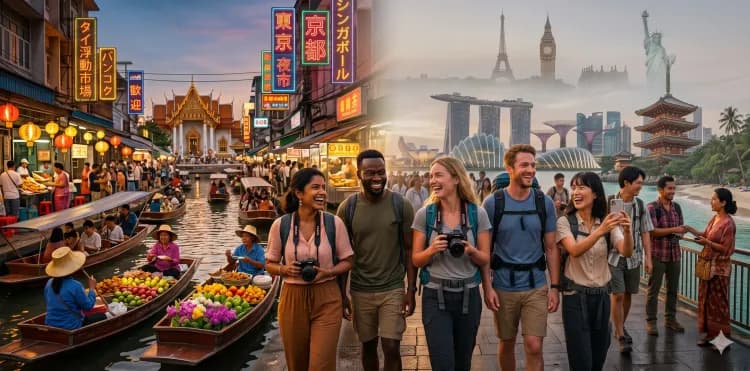
What was once a backpacker's playground is now transforming into a structured, nomad-friendly ecosystem. From Bangkok’s rooftop coworking spaces to Da Nang’s quiet seaside cafés, digital nomad Asia is more than a hashtag—it is a lifestyle movement that continues to gain ground.
Countries like Indonesia, Thailand, and Malaysia are rolling out digital nomad visas, offering long-term stays to freelancers, entrepreneurs, and remote employees. These permits simplify residency and reduce the legal grey zones that once made long stays complicated. As more Asian destinations adopt such policies, the continent is becoming a stable, scalable base for those building global careers from tropical settings.
This movement toward Asia is not only being documented—it is being driven—by social media. Scroll through online content and you will find a new kind of itinerary - slow travel in northern Vietnam, train journeys through Kerala, or temple hopping across Luang Prabang. These are not curated by tourism boards—they are crowd-sourced by creators whose followers are looking for real-time, peer-recommended experiences.
The ripple effect is undeniable. Café culture in Seoul has inspired aesthetic micro-travel videos, while Bali continues to thrive off viral trends around wellness and solitude. In Nepal, solo hikes and off-grid retreats are gaining popularity among digital-first travellers seeking reconnection through disconnection.
But beyond logistics, it is the lifestyle that seals the deal. Morning surf sessions in Bali, weekend food tours in Vietnam, and yoga retreats tucked into Sri Lanka’s hills—Asia delivers a work-life rhythm that few Western cities can replicate. For many, the choice to relocate is not just practical—it is aspirational.
Why Remote Workers Are Choosing Asia
There are a few key reasons remote workers are planting their roots across the continent:
Visa Accessibility: Countries like Indonesia, Thailand, and Malaysia have started rolling out long-stay or digital nomad visas specifically aimed at attracting international professionals. These visas are designed to be low on bureaucracy and high on flexibility—some even allow multiple entries and easy renewals.
Affordability Without Compromise: While Western cities continue to climb the cost-of-living charts, cities across Southeast Asia deliver the exact opposite. Whether it is a fully serviced apartment in Kuala Lumpur or daily meals in Chiang Mai’s night markets, life here comes at a fraction of the price—with few sacrifices in comfort or convenience.
Solid Infrastructure: Asia’s major nomad hubs consistently offer fast, stable Wi-Fi, which remains the baseline for remote productivity. Add to that the abundance of stylish coworking spaces, robust public transportation, and easy access to international airports—and the setup becomes hard to beat.
Work-Life Balance Reimagined: The region encourages balance without trying. Morning surf in Bali, mid-day work calls, and evening street food tours in Hanoi—it is all in a day’s plan. For those burnt out from 9-to-5 grinds in grey office parks, this shift can be life-altering.
Best Cities for Remote Work in Asia
If you're looking for the best cities for remote work, Asia offers more than just one or two strong contenders. Here's where the buzz is –
Bali, Indonesia – A long-time favourite among nomads, with Ubud and Canggu leading the pack in coworking, community, and wellness. Yoga studios, beachfront cafes, and high-speed internet make it easy to balance work and wellbeing.
Chiang Mai, Thailand – Affordable living, a welcoming expat scene, and excellent internet make this mountain city a remote work classic. Its calm pace, walkable streets, and endless cafes create the perfect deep-focus zone.
Da Nang, Vietnam – Blending beaches with modern living, Da Nang is becoming increasingly popular for its pace, cost, and comfort. It’s one of the few places where you can finish a Zoom call and hit the surf in minutes.
Kuala Lumpur, Malaysia – With its multicultural vibe and modern amenities, KL is a great base for those who want city life with lower costs. Reliable public transport and easy access to other Southeast Asian hubs make it a strategic pick.
Ho Chi Minh City, Vietnam – Fast-paced and connected, ideal for remote professionals who enjoy an urban pulse and growing startup culture. With late-night workspaces and a buzzing café scene, HCMC rarely sleeps—and neither do ideas.
Conclusion
The growing preference for Asian destinations in 2025 is not just a passing trend—it signals a shift in how people view travel itself. Travellers are no longer focused solely on ticking off major landmarks or visiting traditionally aspirational locations. Instead, they are seeking value, ease, and meaningful experiences that align with how they live and work today.
Whether it is the streamlined visa systems, affordable cost of living, or a strong cultural offering, Asia is providing what many travellers now prioritise—flexibility without compromise. For remote workers and digital nomads, cities like Bali, Chiang Mai, and Da Nang are not just attractive—they are practical, offering robust infrastructure alongside a lifestyle that makes the workday feel less like a grind.
Meanwhile, younger travellers are increasingly influenced by real people, not brochures. What they see on social media—street food in Hanoi, slow travel through Bhutan, or quiet workdays in a Seoul café—is helping rewrite the global travel narrative. Asia fits this new rhythm - experience-rich, accessible, and real.
In a time marked by high costs, travel restrictions, and shifting personal values, the continent stands out as a space of possibility. The travel landscape of 2025 is less about grand vacations and more about connection, rhythm, and rediscovery. And in that equation, Asia has quietly taken the lead.
FAQs
Why are more travellers choosing Asia over Europe or North America in 2025?
Due to visa hassles, high costs, and safer, more affordable options in Asia, many travellers are rethinking their itineraries to favour Asian destinations with rich culture and lower budgets.
Which are the best Asian countries for first-time travellers?
Thailand, Japan, Vietnam, and Malaysia offer a great mix of ease of travel, safety, infrastructure, and cultural diversity, making them ideal for first-timers.
Are Asian countries safe for solo or female travellers?
Yes. Countries like Japan, South Korea, Singapore, and Vietnam are known for their safety, efficient transport, and welcoming hospitality for solo and female travellers.
Can I work remotely while travelling in Asia?
Absolutely. Countries like Indonesia (Bali), Thailand, Malaysia, and Georgia offer digital nomad visas, strong internet, and thriving remote work communities.
Other topics
Explore and Discover

Planning a Ski Trip Abroad? Here's Why Standard Travel Insurance May Not Be Enough
Thursday, Jul 9, 2026
While standard travel insurance covers common travel risks, it may not include winter sports-related accidents, equipment damage, or emergency mountain rescue.

Why Smart Travellers Never Skip Travel Insurance: Lessons from Real-Life Mishaps
Thursday, Jul 9, 2026
Discover why travel insurance is an essential part of every trip. Learn from real-life travel mishaps—from medical emergencies and lost baggage to flight cancellations and passport issues.

Holiday Travel Checklist: Must Have Essentials for a Stress Free Trip
Thursday, Jul 9, 2026
Planning a holiday? Stay organized and travel with confidence using this complete holiday travel checklist. From essential documents and packing must-haves to health, safety, and tech essentials, discover everything you need for a smooth, stress-free trip and enjoy your vacation without last-minute surprises.