What’s Behind the Boom in Space Tourism? Latest Updates on Civilian Space Flights


Destination (from India)
Dates of Travel (optional)
Introduction
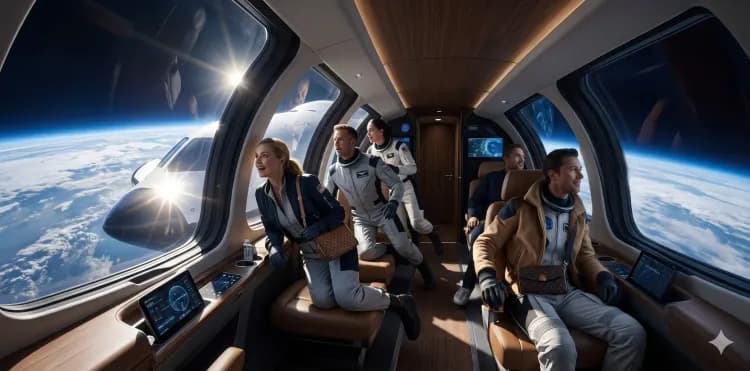
At its core, space tourism means travelling beyond Earth’s atmosphere for leisure, rather than science or military missions. It includes short suborbital hops that let you float in zero gravity for a few minutes. While it’s still expensive, what once seemed impossible is now part of serious planning for many travel enthusiasts.
The boom in civilian space flights in 2025 has been led by companies like SpaceX, Blue Origin, and Virgin Galactic. These businesses have turned rocket launches into live-streamed global events, blending tech innovation with tourism buzz.
What’s especially exciting is how this rise is not just about the thrill of launch day. It reflects bigger shifts in culture, technology, and even consumer behaviour. More people want travel that feels unique, memorable, and status-driven. In many ways, space has become the ultimate bucket-list destination. The countdown has already started—are we ready for take-off?
Who’s Leading? The New Space Race:
The space tourism industry growth we’re seeing today is being fuelled by a handful of key private companies and major support from government space agencies. What was once the domain of government astronauts is now being reshaped by billionaires, tech pioneers, and new-age explorers.
SpaceX, led by Elon Musk, remains far ahead in terms of both technology and reliability. With more than 170 orbital launches expected in 2025 alone, its reusable Falcon 9 and Falcon Heavy rockets, along with the ambitious Starship system, have become the backbone of modern space access. From launching satellites to sending civilians to the International Space Station (ISS), SpaceX is a cornerstone of the civilian space flights 2025 landscape.
Blue Origin, founded by Jeff Bezos, is carving out a unique path with its suborbital New Shepard rocket. As of mid-2025, it has flown 13 successful crewed missions, offering brief but thrilling space experiences. Its larger New Glenn rocket also completed its first orbital test this year, signalling a major step forward in private space exploration trends.
Virgin Galactic has made significant progress with suborbital tourism, completing seven commercial missions between 2023 and 2024. The company retired its Unity spaceplane but plans to launch its new Delta-class vehicle by 2026, expanding options for tourists and researchers alike.
Among newer names, Axiom Space is working towards the first commercial space station, while Space Perspective offers luxury balloon rides to the edge of space, with operations expected to begin in 2025.
Governments are actively supporting this shift. NASA partners with many private companies through Space Act Agreements, and ESA is helping fund European commercial projects with over €1 billion invested by 2024.
In just two years, we’ve moved from test flights to regularly scheduled commercial space travel. This is no longer just a race to orbit—it’s a race to redefine who gets to go and why.
The Changing Customer Base
The world of space tourism is no longer reserved for billionaires and high-profile executives. In recent years, the customer base has shifted dramatically, opening doors to a more diverse range of participants — including scientists, teachers, artists, and even everyday citizens. This transformation is one of the most notable markers of space tourism industry growth.
Earlier missions, like those undertaken by Blue Origin or Virgin Galactic, mostly featured ultra-wealthy individuals seeking status and adventure. But the tide began to turn with innovative projects like Inspiration4, the first all-civilian space mission in 2021. Funded by entrepreneur Jared Isaacman, the crew included a cancer survivor, a data engineer, and an Air Force veteran — none of whom were astronauts. The mission raised millions for charity and showed the world that space wasn’t just for the elite.
Another high-profile attempt to diversify space access was Yusaku Maezawa’s dearMoon project, which aimed to take a group of global artists on a SpaceX lunar mission. Although the project was cancelled in 2024, it pushed forward the idea that space exploration should be cultural and inclusive — not just commercial.
Today, civilian space flights in 2025 include passengers selected via competitions, crowdfunding, or philanthropic efforts. Organisations are exploring ways to give researchers, climate scientists, and educators a seat aboard future missions. This shift reflects broader private space exploration trends aimed at increasing access and public engagement.
We’re also seeing the rise of “citizen astronauts” — people who train for space without military or professional astronaut backgrounds. Their stories resonate with younger generations, many of whom see space travel as a symbol of hope, exploration, and even career aspiration.
In short, the customer base is changing — and with it, the perception of who space is really for. As the commercial space travel updates continue, we can expect a broader cross-section of humanity venturing into orbit.
What’s Driving the Demand? Motives in the New Space Age
The demand for private space travel is booming — and it’s driven by more than just novelty. Today’s travellers are motivated by a blend of cultural fascination, personal ambition, technological excitement, and the desire for transformational experiences. This mix of factors is accelerating space tourism industry growth and making the once-distant dream of space more tangible.
One major driver is the power of popular culture. Films like Gravity and Interstellar, as well as livestreamed rocket launches and astronaut TikToks, have made space part of everyday conversation. Social media amplifies this further: space tourists don’t just go on a trip — they broadcast it, turning each mission into a global spectacle. This creates a “fear of missing out” effect that increases interest and demand.
Then there’s status. Much like summiting Everest or exploring Antarctica, going to space is now seen as the ultimate luxury adventure — one that sets travellers apart. For high-net-worth individuals, it’s both a bucket list achievement and a personal brand statement.
But it’s not just about image. Many are genuinely interested in science, environmental awareness, or contributing to research. Some commercial programmes now offer payload space for scientific experiments alongside paying passengers. This dual-purpose approach is one of the more promising private space exploration trends, making tourism meaningful and productive.
Technological innovation is another powerful force. Thanks to reusable rockets, smarter spacecraft, and automated flight systems, launches are safer and (relatively) cheaper than ever before. Companies like SpaceX and Blue Origin have made civilian space flights in 2025 more common and more reliable.
Finally, the emotional aspect matters. People are drawn to space for its transformative potential — the idea that seeing Earth from orbit might change how we view ourselves and our planet. Known as the “overview effect,” this shift in perspective is cited by many astronauts and now by early space tourists.
Commercial space travel updates show us that demand isn’t just a passing trend. It’s built on deeper motivations: wonder, identity, legacy, and the chance to be part of something historic. These forces are propelling space tourism forward — and shaping the future of travel itself.
The Challenges of Launching Dreams: Risks and Realities
Despite the excitement, the space tourism industry growth hasn’t been without turbulence. While innovation pushes boundaries, real concerns remain about cost, safety, delays, and sustainability.
First, civilian space flights in 2025 are still far from affordable for the average traveller. Even the “low-cost” offerings from companies like Virgin Galactic are priced at around $450,000 per seat, making access heavily skewed toward the ultra-wealthy. This raises questions about the true democratisation of space travel.
Safety is another challenge. Though companies like SpaceX and Blue Origin have impressive launch records, spaceflight is inherently risky. Technical failures, weather unpredictability, and human error still pose significant threats. The 2022 Blue Origin uncrewed booster failure is a reminder that success is never guaranteed. Moreover, the sheer physical strain of launch and re-entry might not be suitable for all travellers.
Delays also plague the industry. The high-profile cancellation of the dearMoon mission in 2024 due to repeated Starship setbacks shows how even billionaire-funded projects can face lengthy postponements. These issues create uncertainty and limit public trust.
Environmental concerns are rising too. While companies promote sustainability, rocket launches still generate significant carbon emissions, particularly with each test flight. The ecological impact of building launchpads and infrastructure also affects local ecosystems.
Despite glowing commercial space travel updates, regulation remains murky. There’s no global framework governing space tourism safety, liability, or passenger rights. The lack of international laws makes it harder to manage risks across borders, especially as more nations and private players enter the game.
Ultimately, while the vision of private space exploration trends is inspiring, there are complex hurdles to overcome. The industry must balance rapid growth with responsibility, equity, and safety if it’s to truly reach the stars.
What’s Next? The Future of Civilian Space Travel
As we look ahead, the future of civilian space flights in 2025 and beyond appears increasingly dynamic. With rising investments, technical innovation, and expanding public interest, the next decade could reshape how humanity views space.
One of the biggest catalysts is technological advancement. Reusable rockets from SpaceX have already lowered launch costs, and the upcoming Starship system promises to reduce them even further. If successful, Starship could carry up to 100 passengers at a time, making space travel more efficient and accessible.
Companies are also developing new ways to experience space. Space Perspective, for example, offers high-altitude balloon trips to the edge of space. These gentle, carbon-neutral journeys provide a panoramic view of Earth, appealing to a broader audience seeking comfort over adrenaline. Innovations like these are part of the evolving private space exploration trends.
Expect to see hybrid experiences—space hotels, zero-gravity entertainment, even lunar retreats. Axiom Space is already building the world’s first commercial space station, scheduled for deployment by the late 2020s. This will allow extended missions for tourists, researchers, and filmmakers.
In addition to tourism, more companies are including citizen science in their offerings. Participants will not only enjoy the view but contribute to scientific research, from studying microgravity to Earth observation. This “travel with purpose” model can add meaning to the experience.
Affordability remains a challenge, but competition is slowly pushing prices down. As launch rates increase and technologies mature, we may see pricing models similar to early air travel—premium today, but within reach for more people tomorrow.
Government support is growing as well. The European Space Agency and NASA continue to fund public-private partnerships, ensuring stability and development. This collaboration fuels space tourism industry growth and improves safety protocols.
As more people enter orbit, cultural narratives will evolve. Today’s spacefarers are not just astronauts or billionaires—they are teachers, artists, and influencers. Their stories will inspire a new generation that sees space not as a distant fantasy, but as a reachable destination.
Conclusion
The rise of space tourism is more than a passing trend—it’s a major shift in how we think about travel, exploration, and our place in the universe. What was once limited to astronauts and billionaires is fast becoming a reality for more people around the world. Thanks to rapid innovation, reusable rocket technology, and a wave of public interest, the space tourism industry growth shows no signs of slowing down.
With new players entering the scene and regular commercial space travel updates hitting the headlines, it’s clear that space is open for business. Missions like Inspiration4 and projects like dearMoon—even when delayed or cancelled—have played a big role in shaping how we imagine the future of spaceflight. They’ve expanded the conversation beyond wealth and technology, and into culture, creativity, and community.
As we head into the next few years, we can expect to see more civilian space flights in 2025, more partnerships between governments and private companies, and more people from all walks of life reaching for the stars. These private space exploration trends are making the final frontier feel a little closer to home. For those dreaming of orbit, the message is simple: space isn’t just for a select few anymore. It’s becoming the next great destination.
FAQs
How much does a civilian space flight cost right now?
Ticket prices for civilian space flights in 2025 vary widely—from $250,000 for a suborbital trip to tens of millions for an orbital journey. However, prices are expected to drop as the space tourism industry grows and technology improves.
Is space tourism safe?
While not without risk, commercial space travel updates show that safety is a top priority. Reusable rockets, extensive testing, and stricter regulations have made launches far more reliable than they were just a decade ago.
Will space travel ever be affordable for the average person?
It’s becoming more likely. As private space exploration trends evolve and more companies enter the market, competition and innovation could reduce costs significantly—potentially making space travel more accessible in the next 10 to 20 years.
Other topics
Explore and Discover

Planning a Ski Trip Abroad? Here's Why Standard Travel Insurance May Not Be Enough
Thursday, Jul 9, 2026
While standard travel insurance covers common travel risks, it may not include winter sports-related accidents, equipment damage, or emergency mountain rescue.

Why Smart Travellers Never Skip Travel Insurance: Lessons from Real-Life Mishaps
Thursday, Jul 9, 2026
Discover why travel insurance is an essential part of every trip. Learn from real-life travel mishaps—from medical emergencies and lost baggage to flight cancellations and passport issues.
Holiday Travel Checklist: Must Have Essentials for a Stress Free Trip
Thursday, Jul 9, 2026
Planning a holiday? Stay organized and travel with confidence using this complete holiday travel checklist. From essential documents and packing must-haves to health, safety, and tech essentials, discover everything you need for a smooth, stress-free trip and enjoy your vacation without last-minute surprises.